

Cart 0
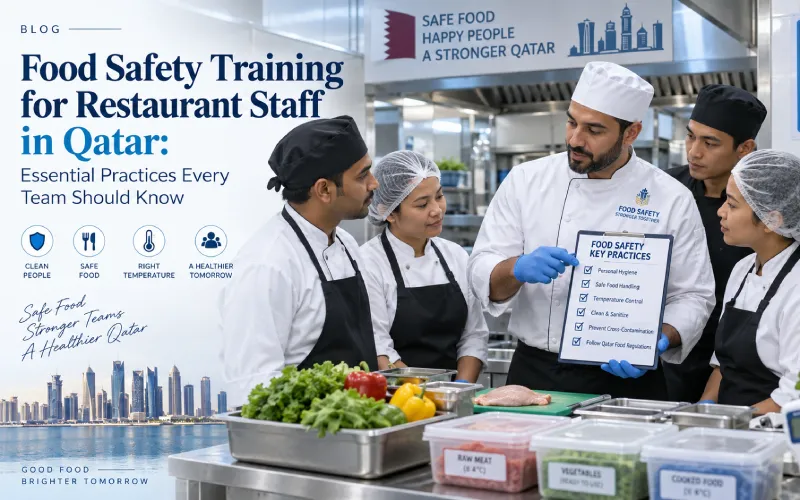
Food Safety Training for Restaurant Staff in Qatar: Essential Practices Every Team Should Know

Food safety is essential for every restaurant in Qatar. From receiving ingredients to preparing, storing, and serving meals, restaurant employees play a direct role in preventing contamination and protecting customers.
Proper food safety training gives staff the knowledge and practical skills needed to handle food responsibly, maintain hygienic working conditions, and follow consistent procedures throughout daily operations.
Why Is Food Safety Training Important for Restaurant Staff?
Restaurant kitchens are busy environments where raw ingredients, cooked food, utensils, equipment, and employees constantly interact. Without proper procedures, contamination can happen quickly.
Food safety training helps employees understand potential hazards and teaches them how to reduce risks before they affect customers. It also helps restaurants build a stronger culture of hygiene and responsibility.
Essential Food Safety Practices Every Team Should Know
1. Maintain Proper Personal Hygiene
Employees should wash their hands thoroughly before handling food and after activities such as using the restroom, handling waste, touching raw ingredients, or cleaning surfaces.
Clean uniforms, appropriate hair restraints, and good personal hygiene should also form part of everyday kitchen practices.
2. Prevent Cross-Contamination
Raw meat, poultry, seafood, vegetables, and ready-to-eat foods should be handled carefully.
Restaurants should use separate utensils, cutting boards, containers, and preparation areas where appropriate. Food-contact surfaces should also be properly cleaned and sanitised between tasks.
3. Follow Safe Food Storage Practices
Correct storage helps protect food quality and reduces the risk of harmful microorganisms developing.
Staff should understand how to:
- Separate raw and cooked foods.
- Store products in suitable containers.
- Follow recommended temperature controls.
- Check expiry and use-by dates.
- Apply proper stock rotation practices.
4. Control Food Temperatures
Temperature control is one of the most important parts of food safety.
Employees responsible for preparing or storing food should understand the importance of appropriate cooking, cooling, reheating, and refrigeration procedures. Regular temperature monitoring can help identify problems before food becomes unsafe.
5. Clean and Sanitise Correctly
Cleaning removes food particles, grease, and visible dirt, while sanitising helps reduce harmful microorganisms.
Restaurant staff should know which surfaces and equipment need regular cleaning, how cleaning chemicals should be used safely, and how frequently different areas should be cleaned.
6. Handle Allergens Carefully
Food allergies can create serious risks for customers.
Restaurant teams should understand common allergens, communicate ingredient information clearly, and minimise accidental cross-contact during food preparation and service.
7. Receive Food Safely
Food safety begins before ingredients enter the kitchen.
Employees receiving deliveries should inspect products for appropriate temperatures, damaged packaging, contamination, expiry dates, and other signs that products may not be suitable for use.
Food Safety Is a Team Responsibility
Food safety should not depend only on chefs or kitchen supervisors. Everyone involved in receiving, preparing, cleaning, storing, or serving food should understand their responsibilities.
Regular training and refresher sessions can help restaurant teams maintain good practices and respond appropriately when food safety concerns arise.
Conclusion
Effective food safety depends on knowledgeable employees and consistent daily procedures. By training restaurant staff in hygiene, contamination prevention, storage, temperature control, cleaning, and allergen management, businesses can create a safer environment for both employees and customers.
Restaurants looking to strengthen their team’s knowledge can explore professional Food Safety Training Programs In Qatar designed to support safer and more consistent food-handling practices.
FAQ
Who should receive food safety training in a restaurant?
Employees who handle, prepare, store, transport, or serve food should receive training appropriate to their responsibilities.
Why is food safety training important in Qatar?
Food businesses need consistent hygiene and food-handling practices to protect customers, reduce contamination risks, and maintain high operational standards.
How often should restaurant staff receive food safety training?
Initial training should be provided when employees begin relevant duties, while refresher training can help reinforce good practices and introduce updated procedures.
What topics are normally covered in food safety training?
Common topics include personal hygiene, cross-contamination prevention, food storage, temperature control, cleaning and sanitising, allergen awareness, and safe food handling.
Can food safety training help prevent foodborne illness?
Yes. Training helps employees identify potential hazards and follow procedures designed to reduce contamination and unsafe food-handling practices.

