

Cart 0
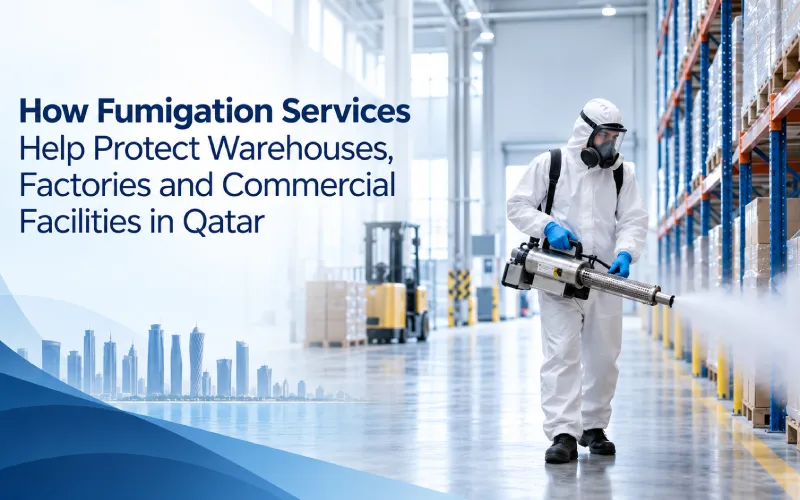
How Fumigation Services Help Protect Warehouses, Factories and Commercial Facilities in Qatar

Warehouses, factories and commercial facilities often provide ideal conditions for pests to spread unnoticed. Stored products, packaging materials, machinery, loading areas and hard-to-reach spaces can all become hiding places for insects and other pests.
For businesses in Qatar, fumigation can be an effective pest management solution when infestations affect large areas, stored goods or locations that are difficult to treat using conventional methods.
Why Pest Infestations Are a Serious Risk for Commercial Facilities
Pest activity can affect far more than the appearance of a workplace. In warehouses and industrial environments, infestations may contaminate stored products, damage packaging, disrupt operations and create hygiene concerns.
Facilities handling food, raw materials, textiles, packaging or imported goods may face additional risks because pests can enter through shipments, pallets, containers and storage areas.
Common pests found in commercial environments can include:
- Stored-product insects
- Cockroaches
- Beetles
- Moths
- Ants
- Termites and wood-damaging pests
- Other insects hiding inside goods, equipment or storage spaces
When infestations become widespread, fumigation may be required to treat areas that standard pest control applications cannot easily reach.
What Is Commercial Fumigation?
Fumigation is a specialised pest control method that uses approved fumigant treatments within a controlled and sealed environment.
Unlike surface treatments, fumigation can penetrate cracks, packaging, stored materials and hidden spaces where pests may be living or breeding.
Depending on the situation, fumigation may be used for warehouses, shipping containers, storage facilities, factories, commodities and other commercial areas.
Professional assessment is important because the treatment method should depend on the type of pest, level of infestation and nature of the facility.
How Fumigation Helps Protect Warehouses and Factories
1. Reaches Hidden Pest Activity
Large commercial facilities often contain shelves, pallets, machinery and storage areas that are difficult to access.
Fumigation allows treatment to reach spaces where insects may remain hidden, helping control infestations throughout the treated area.
2. Protects Stored Products
Pests can damage food products, ingredients, packaging and other stored materials.
Effective fumigation helps reduce the risk of product contamination and protects inventory from further pest-related damage.
3. Helps Control Stored-Product Insects
Warehouses storing grains, dry food products or packaged goods can be vulnerable to beetles, moths and other stored-product pests.
These insects may live inside packaging or products, making them difficult to control using normal surface treatments.
Fumigation can provide more comprehensive treatment when infestations are present inside stored goods.
4. Reduces the Risk of Pest Spread
Pests can move quickly from one section of a warehouse or factory to another.
Treating an infestation early can help prevent pests from spreading into additional storage areas, production zones or incoming and outgoing shipments.
5. Supports Hygiene and Quality Standards
Pest management is an important part of maintaining clean and controlled commercial environments.
Proper fumigation and ongoing pest monitoring can support internal hygiene procedures, quality control programmes and food safety requirements.
When Should a Commercial Facility Consider Fumigation?
Fumigation may be recommended when:
- Pest activity is widespread
- Insects are found inside stored products
- Conventional treatments are not reaching the infestation
- Shipping containers or imported goods require treatment
- A facility is experiencing repeated infestations
- Large storage areas need comprehensive pest control
A professional pest control inspection can help determine whether fumigation is necessary or whether another treatment approach would be more suitable.
Preparing a Facility for Fumigation
Proper preparation is essential before fumigation begins.
Depending on the facility and treatment method, businesses may need to secure products, restrict access, follow safety instructions and temporarily close the treatment area.
Professional fumigation providers should explain the preparation process, treatment procedure and re-entry requirements before work begins.
Fumigation Should Be Part of a Wider Pest Management Programme
Fumigation can control an existing infestation, but businesses should also address the factors that allowed pests to enter or spread.
This may include:
- Inspecting incoming deliveries
- Keeping storage areas clean
- Managing waste properly
- Sealing gaps and entry points
- Monitoring high-risk areas
- Maintaining suitable stock rotation
- Scheduling regular pest inspections
Combining fumigation with preventive pest management can provide stronger long-term protection.
Conclusion
Pest infestations in warehouses, factories and commercial facilities can damage products, disrupt operations and create hygiene risks. Professional fumigation can provide comprehensive treatment when pests are hidden inside stored goods or difficult-to-reach areas.
Businesses dealing with recurring or widespread pest activity can learn more about professional Fumigation In Qatar to determine the most appropriate treatment for their facility.
Frequently Asked Questions
What types of commercial facilities can require fumigation?
Fumigation may be used in warehouses, factories, storage facilities, shipping containers, food storage areas and other commercial environments where widespread or hidden pest infestations are present.
Is fumigation suitable for stored products?
Certain fumigation treatments can be used for stored commodities and products. The appropriate method depends on the product, pest species and applicable safety requirements.
How long does commercial fumigation take?
The duration depends on the size of the treatment area, the fumigation method, the pest being controlled and the required ventilation period.
Can employees remain inside during fumigation?
Normally, access to the fumigated area is restricted during treatment. Employees and other personnel should follow the safety and re-entry instructions provided by the fumigation professionals.
How can businesses prevent pests after fumigation?
Regular inspections, good housekeeping, stock management, sealing entry points and ongoing pest monitoring can help reduce the chance of future infestations.

