

Cart 0
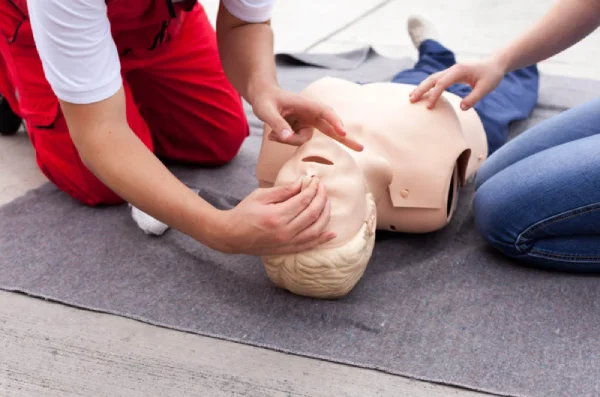

Emergency situations can happen in any workplace, and knowing how to respond appropriately can make an important difference before professional medical assistance arrives.
Emergency First Aid (Level 3) training provides participants with the knowledge and practical skills required to respond safely and effectively to common emergency situations. The training is designed for a general audience and can be applied across different industries, workplaces and professional environments.
The course focuses on assessing emergency situations, prioritising immediate risks and providing appropriate first aid within the scope of the qualification.
What Is Emergency First Aid (Level 3)?
Emergency First Aid (Level 3) is focused on helping participants develop the practical ability to recognise an emergency, assess the situation and provide suitable immediate assistance.
The training helps participants understand not only what actions to take, but also how to respond safely while protecting themselves, the casualty and others around them.
Key areas include emergency assessment, CPR, choking, bleeding, shock, minor injuries and the responsibilities of a first aider.
Role and Responsibilities of a First Aider
An important part of first aid training is understanding the responsibilities that come with providing assistance.
Participants learn about:
- Obtaining consent where appropriate
- Preventing cross-infection
- Using appropriate personal protective equipment
- Maintaining good hygiene
- Recording incidents correctly
- Requesting appropriate emergency assistance
- Understanding the limits of the first aider’s role
These principles help ensure first aid is provided in a safe, responsible and organised manner.
Assessing an Emergency Situation
Before providing first aid, it is important to assess the situation carefully.
Emergency First Aid (Level 3) training teaches participants how to carry out an emergency assessment and identify conditions that may be life-threatening.
A systematic approach allows the first aider to prioritise the most urgent problems and decide what immediate action is required.
Responding to an Unresponsive Casualty
The training also prepares participants to respond when a person becomes unresponsive.
Participants learn how to:
- Recognise when CPR is required
- Perform adult CPR
- Place a casualty in the recovery position
- Monitor breathing
- Respond appropriately to seizures
These practical skills can help participants remain calm and follow the correct steps during a serious emergency.
First Aid for Choking
Choking can quickly become a serious medical emergency if the airway becomes blocked.
The training covers how to distinguish between mild and severe choking and how to respond appropriately.
Participants learn first-aid interventions including back blows and abdominal thrusts, as well as when CPR may become necessary if the casualty becomes unresponsive.
Managing External Bleeding and Shock
Severe bleeding requires immediate attention.
Emergency First Aid (Level 3) training helps participants recognise potentially life-threatening bleeding and take appropriate action while emergency medical assistance is being arranged.
Training includes:
- Applying direct pressure
- Using suitable dressings
- Recognising serious blood loss
- Understanding hypovolaemic shock
- Providing immediate first aid while waiting for emergency services
Being able to recognise both visible bleeding and the signs of shock is an important part of emergency response.
Treatment of Minor Injuries
Not every workplace incident is life-threatening, but minor injuries still require appropriate care.
The training covers first aid for common injuries such as:
- Cuts
- Grazes
- Bruises
- Splinters
- Nosebleeds
- Minor burns
- Minor scalds
Participants learn how to manage these injuries appropriately and understand when further medical assistance may be needed.
Knowledge and Practical Skills Developed
By completing Emergency First Aid (Level 3) training, participants develop a more structured approach to emergency situations.
The training helps participants learn how to:
- Assess an emergency systematically
- Identify and prioritise life-threatening conditions
- Provide appropriate immediate first aid
- Reduce the risk of infection
- Respond safely to common workplace emergencies
- Recognise when professional emergency assistance is required
The aim is to help participants respond appropriately and confidently within the limits of their first aid training.
Emergency First Aid for Different Workplace Environments
Because Emergency First Aid (Level 3) is designed for a general audience, the knowledge gained can be useful across a wide range of workplace environments.
Employees working in offices, retail environments, hospitality businesses, warehouses, construction sites, industrial facilities and other workplaces may all encounter situations where immediate first aid knowledge is valuable.
The core principles of emergency assessment, casualty care and appropriate escalation can therefore support emergency preparedness across different sectors.
Important Note About AED Training
AED use is not included within the topics covered by this Emergency First Aid (Level 3) qualification.
Training descriptions for this qualification should therefore focus on the emergency first aid knowledge and practical skills actually covered within the programme rather than referring to AED use.
Building Better Emergency Preparedness Through First Aid Training
Emergency First Aid (Level 3) training gives participants practical knowledge that can help them respond more effectively when an emergency occurs.
From assessing a casualty and performing CPR to dealing with choking, bleeding, shock and minor injuries, the course provides a structured foundation for immediate first aid response.
For workplaces looking to strengthen emergency preparedness and provide employees with practical response skills, First Aid Training in Qatar at Boecker can help teams build the knowledge needed to respond appropriately during workplace emergencies.
Frequently Asked Questions
What does Emergency First Aid (Level 3) cover?
The training covers emergency assessment, the responsibilities of a first aider, care of an unresponsive casualty, adult CPR, the recovery position, seizures, choking, external bleeding, shock and the treatment of common minor injuries.
Who is Emergency First Aid (Level 3) suitable for?
The training is designed for a general audience and can be relevant to participants working across different industries and workplace environments.
Does the training include CPR?
Yes. Participants learn how to recognise when CPR is required and how to perform adult CPR as part of responding to an unresponsive casualty.
Does Emergency First Aid (Level 3) include AED training?
No. AED use is not included within the topics covered by this qualification.
What types of minor injuries are covered?
The training includes appropriate first aid responses for cuts, grazes, bruises, splinters, nosebleeds, minor burns and scalds.
What is the main objective of the training?
The main objective is to develop the ability to assess emergency situations systematically, prioritise life-threatening conditions, provide appropriate immediate first aid, reduce infection risks and recognise when professional emergency assistance is required.

