

Cart 0
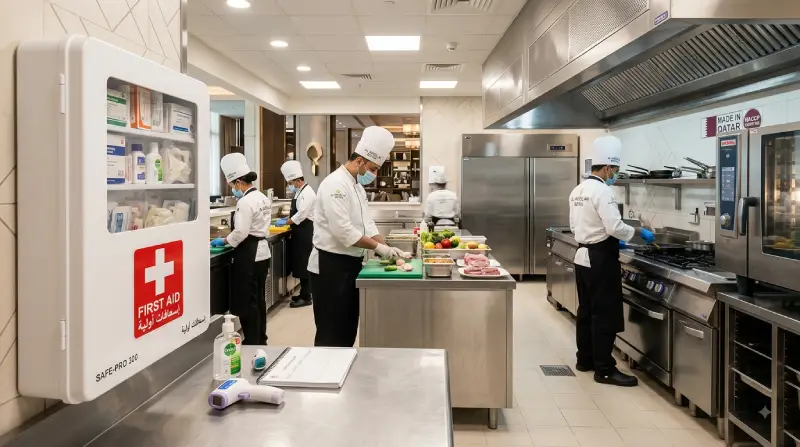
First Aid Training Requirements for Restaurants and Hospitality Businesses in Qatar

Restaurants and hospitality businesses are fast-moving workplaces where employees regularly handle hot surfaces, sharp equipment, electrical appliances, heavy items and cleaning chemicals. At the same time, they are responsible for the wellbeing of customers, delivery personnel and other visitors on their premises.
In addition to protecting employees and customers, workplace first-aid readiness forms part of an employer’s occupational health and safety responsibilities in Qatar.
Why First Aid Matters in Restaurants and Hotels
Hospitality businesses face a broader range of everyday hazards than many office-based workplaces. Kitchens, dining spaces, storage rooms, hotel rooms, swimming pools, banquet halls and delivery areas can each present different risks.
Common incidents in the hospitality industry include:
- Burns from ovens, grills, boiling water and hot oil
- Cuts caused by knives, slicers and broken glass
- Slips and falls on wet kitchen or dining-area floors
- Choking incidents involving customers
- Allergic reactions to food ingredients
- Electrical injuries caused by kitchen equipment
- Chemical exposure from cleaning products
- Strains caused by lifting supplies or equipment
- Heat-related illness among outdoor or delivery employees
- Sudden medical emergencies involving guests or employees
First-aid training gives selected employees the knowledge and confidence to provide immediate assistance while professional medical help is being arranged.
It can also reduce panic and confusion by ensuring that employees understand who should respond, where emergency supplies are located and how the surrounding area should be managed.
Which Restaurant Employees Should Receive First Aid Training?
Restaurant owners should select employees who are regularly present, dependable and able to respond calmly during an emergency.
Suitable candidates may include:
Kitchen Supervisors
Kitchen supervisors are often close to areas where burns, cuts and equipment-related injuries are most likely to happen.
Restaurant Managers
Managers can coordinate the overall response, contact emergency services, manage customers and ensure that the incident is properly reported.
Front-of-House Supervisors
Front-of-house employees may be the first to notice a choking incident, allergic reaction, fall or sudden illness involving a customer.
Hotel Security Employees
In larger hospitality properties, security personnel may support emergency responses across guest rooms, restaurants, public spaces and event venues.
Housekeeping Supervisors
Housekeeping employees work across hotel rooms, corridors and service areas where slips, chemical exposure and manual-handling incidents may occur.
Shift Leaders
Having trained shift leaders helps maintain coverage when managers or other designated first aiders are unavailable.
Training employees from different departments can create a more reliable response system than depending on a single person.
What Should Hospitality First Aid Training Cover?
First-aid training for restaurants and hospitality businesses should reflect the incidents employees are most likely to encounter.
A practical workplace course may cover:
- Assessing an emergency safely
- Responsibilities of a workplace first aider
- Contacting emergency medical services
- Managing an unconscious person
- Cardiopulmonary resuscitation
- Using an Automated External Defibrillator
- Responding to choking
- Controlling cuts and bleeding
- Managing burns and scalds
- Responding to falls and possible fractures
- Recognising serious allergic reactions
- Managing common workplace injuries
- Preventing cross-contamination while providing assistance
Practical exercises and realistic scenarios are particularly useful in hospitality environments. Employees should understand not only what action to take, but also how to protect themselves, the injured person and surrounding customers.
Boecker Qatar’s training courses focus on practical learning, case studies and interactive exercises intended to help workplace participants respond effectively during emergencies.
Preparing for Kitchen Burns and Scalds
Burns are among the most recognisable hazards in commercial kitchens. Employees may be injured by hot oil, steam, boiling liquids, grills, ovens, heated cookware or open flames.
Restaurant owners should reduce these risks through preventive measures such as:
- Using suitable protective clothing
- Maintaining cooking equipment
- Keeping pan handles away from walkway edges
- Avoiding overcrowding around hot workstations
- Cleaning oil and liquid spills promptly
- Training employees in safe kitchen procedures
- Making appropriate first-aid supplies accessible
Employees should be trained to assess the seriousness of a burn and understand when emergency medical assistance is necessary. Untrained staff should avoid applying unsuitable substances or attempting treatments that may worsen an injury.
Preparing for Cuts and Bleeding
Knives, food-processing equipment, metal containers and broken glass can cause cuts ranging from minor injuries to serious bleeding.
Restaurant procedures should address:
- Safe knife handling
- Correct use of slicers and food-processing equipment
- Disposal of broken glass
- Safe storage of sharp tools
- Immediate reporting of injuries
- Hygienic management of food-contact areas after an incident
First aiders should know how to control bleeding, protect themselves from direct contact with blood and determine when urgent medical care is needed.
The affected food-preparation area must also be managed carefully so that the incident does not create a food-contamination risk.
Preparing for Customer Choking Incidents
Choking is a particularly important concern for restaurants because the emergency may involve a customer rather than an employee.
Front-of-house teams should understand how to:
- Recognise signs of choking
- Alert a trained first aider immediately
- Contact emergency services
- Create space around the affected customer
- Direct emergency responders to the correct location
- Keep other customers calm
- Record the incident afterwards
Employees who have not received appropriate training should not attempt techniques they do not understand. This is why restaurants benefit from having trained personnel available during every service period.
Food Allergies and Medical Emergencies
Customers may experience severe allergic reactions after consuming or coming into contact with an allergen. Although food-allergen management and first aid are separate responsibilities, both should be included within a restaurant’s broader emergency planning.
Employees should know how to:
- Treat an allergy report seriously
- Communicate ingredient information accurately
- Avoid guessing when allergen information is uncertain
- Alert a manager and trained first aider
- Contact emergency medical services when required
- Preserve relevant order and ingredient information
- Document the incident
First-aid training does not replace strong allergen-control procedures. Restaurants must also manage ingredient information, cross-contact risks and communication between kitchen and service teams.
Where Should First-Aid Boxes Be Located?
Qatar Labour Law requires the first-aid box to be kept in a conspicuous location and within easy reach of workers.
In a hospitality business, this means the box should not be hidden in a locked management office or stored where only one employee can access it.
Depending on the size and layout of the premises, suitable locations may include:
- The main commercial kitchen
- A manager’s station near the dining area
- A hotel reception or security office
- Housekeeping service areas
- Banquet and event facilities
- Staff accommodation or employee areas
- Separate preparation or storage facilities
Locations should be clearly marked, communicated to employees and kept free from obstruction.
Check First-Aid Supplies Regularly
Assigning responsibility for the first-aid box is an important part of maintaining readiness.
The designated person should regularly check whether:
- Required items are present
- Used products have been replaced
- Packaging remains sealed and undamaged
- Products have not expired
- The box is clean and clearly marked
- Employees can access it quickly
- Emergency contact information is current
A simple inspection record can help managers confirm that checks are being completed consistently.
Because restaurants may operate long hours, managers should also ensure that access does not depend on a key held by an employee who may not be on duty.
Create a Restaurant Emergency Response Procedure
A written procedure helps employees respond consistently when an incident occurs.
The procedure should clearly explain:
- Who the trained first aiders are
- How employees can contact them
- Where first-aid boxes and AEDs are located
- Who should call emergency medical services
- Who should direct responders into the building
- How customers should be moved away from the incident
- Who should inform management
- How the incident should be documented
- How food preparation should be controlled following an injury
- When equipment or an affected area should be taken out of use
The plan should be communicated during employee onboarding and reinforced through periodic briefings or drills.
Emergency contact details should also be displayed where employees can find them quickly.
First Aid Planning for Hotels and Larger Hospitality Properties
Hotels require broader planning because emergencies can happen across several departments and locations.
A hotel may need to consider:
- Guest rooms and corridors
- Restaurants and commercial kitchens
- Swimming pools and leisure facilities
- Fitness centres
- Ballrooms and event spaces
- Housekeeping and laundry areas
- Maintenance workshops
- Loading and delivery areas
- Staff accommodation
- Outdoor facilities
Managers should evaluate response times between different parts of the property. A first-aid box or trained person located at reception may not provide sufficient practical coverage for a remote kitchen, pool or maintenance area.
Larger properties should therefore coordinate first-aid responsibilities between management, security, food and beverage, housekeeping, engineering and recreation teams.
Keep Training Records Up to Date
Restaurant owners should maintain an organised record of employees who have completed first-aid training.
The record may include:
- Employee name
- Job title and department
- Work location
- Normal shift
- Course completed
- Training provider
- Completion date
- Certificate details
- Refresher or renewal date
Managers should review these records whenever employees leave, transfer to another branch or change shifts.
Refresher training is also important because employees may lose confidence or forget procedures when they do not use their skills regularly.
Common First-Aid Mistakes Restaurant Owners Should Avoid
Keeping Supplies in an Inaccessible Location
First-aid boxes should be easy to identify and reach during an emergency.
Training Only a Day-Shift Employee
Restaurants operating evening or late-night services should maintain trained coverage during those periods as well.
Failing to Replace Used Supplies
An incomplete first-aid box may not contain what employees need when a serious incident occurs.
Relying on Untrained Managers
A senior job title does not automatically mean that a person knows how to provide appropriate first aid.
Ignoring Customer Emergencies
Emergency procedures should consider incidents involving guests and delivery personnel, not only direct employees.
Treating Training as a One-Time Activity
Staff turnover, branch expansion and changes to operating hours can make an old first-aid plan ineffective.
Conclusion
Restaurants and hospitality businesses in Qatar should treat first-aid preparedness as an essential part of daily operations. Owners need to understand the legal requirements connected to their workforce size while also considering kitchen hazards, customer emergencies, shift patterns and the layout of their premises.
Accessible first-aid supplies, trained employees and a clear emergency procedure can help restaurants respond more effectively when an incident occurs. For hospitality businesses seeking practical workplace instruction, Boecker Qatar offers Fire Safety and First Aid Training Courses that can help teams build the skills and confidence required to manage emergencies responsibly.
FAQs
Is first aid training compulsory for restaurants in Qatar?
Article 104 of Qatar Labour Law requires an employer with between 5 and 25 workers to provide an appropriately supplied first-aid box and entrust its use to a worker trained in medical first aid. Additional requirements apply as the workforce increases.
How many trained first aiders should a restaurant have?
The appropriate number depends on the restaurant’s employee count, operating hours, shifts, layout and risks. Even when one trained worker may satisfy a minimum requirement, restaurants may need additional trained employees to maintain reliable coverage across all shifts.
Does every restaurant shift need a trained first aider?
Shift-based coverage is a sensible operational practice because emergencies can occur at any time. Restaurant owners should avoid creating a situation in which the only trained employee is absent during evening, weekend or holiday operations.
What first-aid risks are most common in restaurants?
Common risks include burns, scalds, cuts, bleeding, slips, falls, choking incidents, allergic reactions and injuries involving kitchen equipment.
Where should a restaurant keep its first-aid box?
It should be kept in a visible and easily accessible location. Larger restaurants or hospitality properties may need supplies in more than one work area, depending on their workforce and layout.
Should restaurant employees receive CPR and AED training?
CPR and AED instruction can strengthen a restaurant’s ability to respond to serious medical emergencies. The training selected should be appropriate for the business, its risk assessment and the responsibilities assigned to employees.
How often should first-aid supplies be checked?
Restaurants should establish a regular inspection schedule and check the box after any incident in which supplies are used. Expired, damaged or missing products should be replaced promptly.